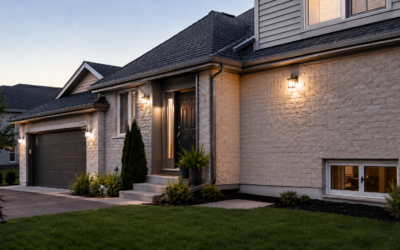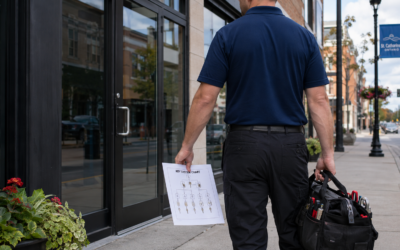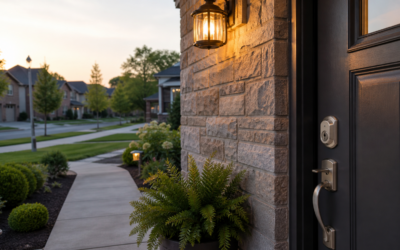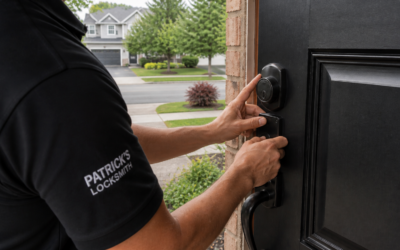
The Niagara Peninsula experiences some of the most dynamic weather patterns in Southern Ontario. Situated between Lake Erie and Lake Ontario, property owners across St. Catharines, Niagara Falls, Welland, and surrounding communities face a unique cocktail of environmental challenges: microclimatic humidity spikes in the summer, severe freeze-thaw cycles in the winter, and damp, heavy winds during spring and autumn.
While most homeowners and commercial property managers focus on roof maintenance or HVAC tuning, door hardware is frequently overlooked—until a key snaps off inside an icy cylinder, a deadbolt fails to throw properly, or an exterior door binding against its frame leaves a storefront vulnerable overnight.
Understanding how ambient moisture, extreme thermal shifts, and seasonal atmospheric conditions impact your entryways is essential for maintaining building security, fire safety, and smooth daily access. In this comprehensive guide, we examine the mechanical science behind climate-induced lock failures and outline practical solutions to keep your residential and commercial entryways functioning flawlessly throughout the year.
Need Immediate Mobile Locksmith Support in Niagara?
If your doors are sticking, keyways are freezing, or deadbolts are out of alignment due to seasonal shifts, don’t force the mechanism and risk breaking your key. Patrick’s Locksmith Emergency Mobile Services offers rapid, professional lock repair, re-alignment, and weather-resistant hardware upgrades across the entire Niagara Region. Call today for a free on-site consultation.
The Physics of Thermal Expansion & Contraction in Door Frames
To understand why door hardware fails during weather transitions, one must first look at the structural materials that frame your locks. Entryways consist of multiple interacting components—the door slab, the frame (jamb), hinges, latch mechanisms, and strike plates. Each material expands and contracts at different rates when exposed to atmospheric temperature fluctuations and relative humidity shifts.
+-----------------------------------------------------------------------+
|                       NIAGARA ATMOSPHERIC EXPOSURE                     |
|            (High Summer Relative Humidity / Sub-Zero Winter)          |
+-----------------------------------------------------------------------+
                                   |
                                   v
+-----------------------------------------------------------------------+
|                       MATERIAL BEHAVIOR & SHIFTS                      |
+------------------------------------+----------------------------------+
| Wood Slabs & Frames:               | Metal Frames & Glass Insert Doors:|
| Absorbs moisture -> Swells/Warps   | Thermal expansion -> Binding     |
+------------------------------------+----------------------------------+
                                   |
                                   v
+-----------------------------------------------------------------------+
|                          MECHANICAL FRICTION                          |
|             (Latch Bolt & Deadbolt Misalignment with Strike)           |
+-----------------------------------------------------------------------+
                                   |
                                   v
+-----------------------------------------------------------------------+
|                           HARDWARE FAILURE                            |
|        Key Resistance, Internal Tailpiece Bending, Sheared Pins        |
+-----------------------------------------------------------------------+
Wood Slabs vs. Metal Frames
Solid wood and engineered wood doors absorb ambient moisture from the surrounding air. During hot, humid Niagara summers—where relative humidity routinely exceeds 80%—wooden door slabs absorb airborne water vapor, expanding across both their vertical height and horizontal width.
Conversely, aluminum and hollow metal doors commonly installed on commercial properties in Thorold and Grimsby expand primarily due to direct solar radiation and ambient temperature shifts. When metal expands, the clearance between the door slab and jamb shrinks, leading to frame binding.
Latch Bolt & Strike Plate Misalignment
When a door slab swells or shifts off its vertical axis:
- The latch bolt or deadbolt throw no longer aligns precisely with the hole in the jamb’s strike plate.
- The user must push, pull, or lift the door slab with considerable body weight to force the key cylinder to turn.
- This force exerts immense torque on the internal brass pin tumblers, tailpiece, and latch spring, causing key bending or internal mechanical binding.
According to architectural door hardware guidelines published by the [External Link: Door and Hardware Federation Standards], a clearance gap of 1/8 inch (3.2 mm) between the door edge and frame is mandatory to accommodate normal thermal drift without causing latch binding.
Humidity, Moisture Ingress, and Internal Lock Corrosion
Moisture affects door hardware both macroscopically through frame shift and microscopically inside the lock cylinder. A standard pin-tumbler lock contains tiny brass or stainless steel pins, small copper springs, a revolving plug, and an outer housing shell.
+-----------------------------------------------------------------------------+
|                      PIN-TUMBLER CYLINDER CROSS-SECTION                     |
+-----------------------------------------------------------------------------+
|  [Spring]   [Spring]   [Spring]   [Spring]   [Spring]  <- Driver Springs    |
|  [ Pin 1]   [ Pin 2]   [ Pin 3]   [ Pin 4]   [ Pin 5]  <- Upper Driver Pins |
|========== Shear Line ====================================================== |
|  [ Pin A]   [ Pin B]   [ Pin C]   [ Pin D]   [ Pin E]  <- Key Pins (Cut-depth)|
|  ------------------ Keyway Opening (Moisture Ingress Zone) ---------------  |
+-----------------------------------------------------------------------------+
The Mechanism of Internal Corrosion
When high relative humidity air enters the keyway—especially in coastal or lake-facing zones like Port Colborne, Fort Erie, and Niagara-on-the-Lake—moisture settles inside the tight pin chambers.
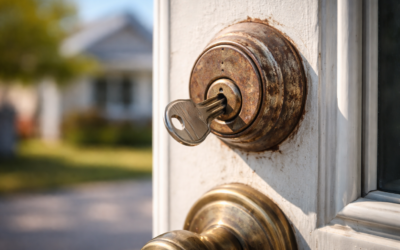
- Galvanic Corrosion: When dissimilar metals inside the lock (such as steel springs resting against brass pins) interact with ambient moisture and salt air swept off Lake Erie or Lake Ontario, galvanic corrosion occurs. Oxidation forms a rough, crusty deposit inside the chamber walls.
- Spring Binding: Microscopic corrosion restricts top driver springs from pushing the pins down smoothly onto the key cut cuts. This leads to key insertion difficulty, sticky cylinder rotation, or complete lock failure where the key refuses to turn.
- Oil & Grease Degradation: Petroleum-based grease or improper wet lubricants inside the cylinder trap dust, pollen, and airborne dirt. Over time, heat and humidity turn this mixture into a gummy sludge that cements the pin stack in place.
Freezing Rain, Ice Accumulation, and Sub-Zero Freeze-Thaw Cycles
Niagara winters present a severe challenge to exterior door hardware due to frequent freeze-thaw cycles. Temperatures often fluctuate above freezing during the day and drop sharply below zero at night.
+-----------------------------------------------------------------------+
|                      THE FREEZE-THAW DAMAGE CYCLE                     |
+-----------------------------------------------------------------------+
|  Daytime Melt / Rain: Water enters keyway & mortise body mechanics.   |
|                                   |                                   |
|                                   v                                   |
|  Nighttime Freeze: Temperatures drop below 0°C (32°F).                |
|                                   |                                   |
|                                   v                                   |
|  Ice Expansion: Volumetric expansion forces components apart.        |
|                                   |                                   |
|                                   v                                   |
|  Operational Lockout: Cylinder plug immobilized; force breaks key.    |
+-----------------------------------------------------------------------+
Keyway Icing and Water Trapping
When rain or melting roof runoff drips into an unshielded exterior lock cylinder during the late afternoon, the trapped water expands as it freezes overnight. Water expands by roughly 9% upon freezing, generating high localized pressure inside tiny pin chambers:
- Pins become locked into position by solid ice bridges.
- Forcing a key into an ice-choked keyway can bend or shear the key cuts.
- Forcing the key to turn while the plug is frozen risks snapping the key head completely off, requiring an emergency locksmith extraction.
Electric Strike and Mortise Lock Freezing in Commercial Applications
Commercial glass storefront doors in areas like downtown St. Catharines and Niagara Falls frequently employ electric strikes or heavy mortise locks. Moisture dripping down inside the door frame cavity during rainstorms can freeze around solenoid plungers or mechanical latch release levers, preventing employees from unlocking commercial access gates or emergency egress doors in the morning.
7 Essential Solutions for Managing Door Hardware Weather Niagara Challenges
To protect your home or business against climate-induced lock failures, follow these seven proven maintenance strategies and hardware solutions tailored to Niagara’s environmental profile.
1. Seasonal Strike Plate Adjustments & Adjustable Lip Plates
As temperature and humidity fluctuate between summer and winter, your door’s strike plate alignment will inevitably drift.
- Installing an adjustable lip strike plate allows you to shift the latch pocket position by several millimeters without needing to chisel or re-drill wooden jambs.
- In high-moisture periods, loosening the strike screws and slightly altering the plate alignment restores smooth latch clearance, eliminating the need to slam or lean on the door to throw the deadbolt.
2. Modern Dry Lubricants vs. Wet Lubricants
One of the most common DIY mistakes made by property owners is spraying WD-40 Multi-Use Product or standard machine oil into a sticky lock cylinder.
Important Maintenance Warning: Standard solvent sprays act as temporary degreasers, washing away factory lubricants while leaving behind a sticky oil residue that attracts dirt, airborne dust, and moisture. In cold winter conditions, this residue thickens into a thick paste that freezes solid.
Instead, use lubricative formulations designed specifically for lock cylinders:
- Dry Graphite Lubricant: Fine graphite powder provides dry, friction-reducing film across pin surfaces without attracting dust. Apply sparingly into the keyway.
- PTFE (Teflon) Dry Film Sprays: Advanced synthetic PTFE lubricants spray on liquid to penetrate internal springs and evaporate cleanly, leaving a dry coating that repels water and prevents corrosion.
| Lubricant Type | Dust Attraction | Water Resistance | Low Temp Suitability | Best Used For |
| WD-40 Classic | High (Sticky) | Poor (Washes off) | Very Low (Freezes) | Displacing surface water, Rust removal only |
| Dry Graphite | Zero | Moderate | Excellent (-40°C) | Manual key cylinders, Pin tumblers |
| PTFE Dry Film | Zero | High (Repels water) | Superior (-50°C) | Mortise locks, Smart lock keypads, Cylinders |
| Silicone Spray | Low | High | Good | Weatherstripping rubber seals, Latch bolts |
3. Weatherstripping & Door Sweep Installation
Keeping rain, fog, and drafty humidity away from the lock hardware starts with sealing the perimeter of the door slab.
- Silicone Bulb Seals: Replace cracked, brittle vinyl perimeter seals with high-grade silicone weatherstripping that retains flexibility down to -40°C.
- Heavy-Duty Neoprene Door Sweeps: Install adjustable aluminum sweeps with neoprene inserts along the lower edge of exterior doors to prevent ground moisture, rain splash, and drifting snow from seeping under the door threshold into interior mortise lock bodies.
4. Upgrade to Grade 1 or Commercial Weather-Proofed Hardware
If your residential or commercial property faces direct windward weather from Lake Ontario or Lake Erie, consider replacing builder-grade door locks with commercial-grade, weather-sealed hardware.
- ANSI/BHMA Grade 1 Certification: Grade 1 hardware features heavy-duty return springs, thicker brass cylinders, and heavy steel latch housings built to withstand extreme mechanical stress.
- Gasket-Sealed Escutcheon Plates: Premium commercial entry locks feature rubber or silicone perimeter gaskets beneath the outer rose plates to stop wind-driven rain from entering the door cutouts.
5. Proper Door Alignment, Hinge Tightening & Long-Screw Reinforcement
A sagging door will amplify weather-related lock binding. Over time, top hinge screws set into thin pine frames back out due to the heavy weight of solid doors swinging against summer humidity expansion.
- Remove the center wood screws from the top hinge on the jamb side and replace them with 3-inch hardened steel screws.
- These long screws pass through the finished jamb and bite directly into the structural wall studs, pulling the entire door slab back into plumb alignment and relieving tension on your latch bolt and deadbolt.
+-------------------------------------------------------------------------+
|                  LONG-SCREW HINGE REINFORCEMENT                         |
+-------------------------------------------------------------------------+
| [Door Frame Jamb] ===> [Air Space] ===> [2x4 Framing Wall Stud]          |
|                                                                         |
|  (Standard 3/4" Screw) - Only grips soft finish jamb wood (Pulls loose) |
|  ---------------------->                                                |
|                                                                         |
|  (3" Structural Screw) - Anchors firmly through jamb into wall stud!   |
|  ---------------------------------------------------------------------> |
+-------------------------------------------------------------------------+
6. Electronic Smart Lock Weather Protection & Battery Maintenance
Digital keypads are increasingly popular across Niagara residential homes and short-term vacation rentals in Niagara-on-the-Lake. However, extreme winter cold significantly impacts electronic door hardware.
- Battery Degradation: Standard alkaline batteries lose voltage rapidly when temperatures drop below freezing, leading to premature motor failure or low-power keyless lockouts.
- Lithium Battery Upgrades: Use premium AA Lithium batteries (such as Energizer Ultimate Lithium) in exterior electronic deadbolts. Lithium chemistry maintains stable voltage outputs in extreme winter climates ranging down to -40°C.
- IP Weather Ratings: Ensure keypad units carry an IP65 ingress protection rating or higher to prevent rain and humidity from penetrating internal printed circuit boards (PCBs).
7. Proactive Seasonal Lock Inspections
Perform a quick, 5-minute seasonal audit every spring and autumn:
- Insert key smoothly into keyway—listen for grinding or stiff pin movement.
- Check if the deadbolt extends smoothly into the strike hole without forcing the thumbturn.
- Inspect rubber weatherstripping around the perimeter for tears or compression set.
- Clean faceplates, latch bolts, and keyways with a dry cloth and apply a quick burst of PTFE spray.
Local Considerations for Managing Door Hardware Weather Niagara Conditions
Environmental stressors on entry doors vary significantly across the distinct municipalities of the Niagara Region. Understanding local microclimates helps tailor your security approach:
St. Catharines & Thorold (Escarpment & Canal Humidity)
Properties situated along the Niagara Escarpment and near the Welland Canal experience localized fog pockets, high relative humidity, and damp valley winds. Wooden door frames on older character homes in downtown St. Catharines and Port Dalhousie swell noticeably during spring thaws and summer heat waves, requiring regular hinge adjustment and strike plate tuning.
Niagara-on-the-Lake & Grimsby (Lakefront Exposure)
Homes along the shores of Lake Ontario in Niagara-on-the-Lake, Virgil, and Grimsby are subjected to damp shoreline air and persistent onshore winds. Salt spray and ambient moisture accelerate surface oxidation on decorative brass and bronze door handles. Exterior locks in these lakefront zones require protective silicone lubricant treatments twice annually to prevent keyway binding.
Port Colborne & Fort Erie (Lake Erie Ice & Wind Waves)
Southern Niagara communities bordering Lake Erie endure intense winter lake-effect weather, freezing gales, and driving snowstorms. Commercial and residential deadbolts in Port Colborne and Fort Erie face severe freeze-thaw cycles that push water deep into keyway mechanisms, making high-quality weather covers and lithium-powered electronic locks essential.
Welland, Lincoln & Pelham (Interior Microclimates & Temperature Extremes)
Central and inland agricultural zones in Welland, Pelham (Fonthill), and Lincoln experience higher inland heat indexes during summer and sharp sub-zero drops in winter. Thermal expansion on metal commercial doors along industrial corridors requires Grade 1 architectural hardware and proper frame clearance adjustments.
DIY vs. Professional Locksmith Intervention: Knowing when to call Patrick
While homeowners can handle basic dry graphite lubrication and weatherstripping replacement, structural frame shift and internal lock damage require specialized technical expertise. Attempting aggressive DIY fixes—such as grinding away strike plate metal with a high-speed rotatory tool—can permanently ruin door alignment, compromise fire-rated doors, and invalidate home insurance policies.
+-----------------------------------------------------------------------+
|                    DIAGNOSTIC WORKFLOW FOR DOOR LOCKS                 |
+-----------------------------------------------------------------------+
|  Symptom: Key resists turning or door requires physical pushing       |
+-----------------------------------------------------------------------+
                                   |
                                   v
             +-------------------------------------------+
             | Test door while wide open in frame        |
             +-------------------------------------------+
               /                                       \
              /                                         \
             v                                           v
+-----------------------------+           +-----------------------------+
| Lock turns smoothly OPEN    |           | Lock sticks while OPEN      |
+-----------------------------+           +-----------------------------+
| REASON: Door frame shift /  |           | REASON: Internal corrosion, |
| strike misalignment.        |           | bent tailpiece, or worn pins|
|                             |           |                             |
| SOLUTION: Adjust hinges,    |           | SOLUTION: Cylinder re-pin,  |
| re-align strike plate, or   |           | professional disassembly,   |
| install adjustable lip.     |           | or cylinder replacement.    |
+-----------------------------+           +-----------------------------+
When to Contact Patrick’s Locksmith Service
If you encounter any of the following critical security warnings, contact a certified mobile locksmith immediately:
- The Key Turns, But the Latch Doesn’t Retract: The internal tailpiece or spindle has sheared or disengaged inside the lock body due to persistent frame resistance.
- Key Insertion Requires Tapping or Force: Pins are rusted, bound by ice, or worn out of alignment; forcing the key will snap the blade inside the lock cylinder.
- Fire-Rated Egress Doors Drag or Catch: Commercial panic hardware or door closers fail to latch automatically due to frame swell, creating an illegal building code violation and serious safety risk.
Protect Your Home or Business with Expert Local Locksmith Services
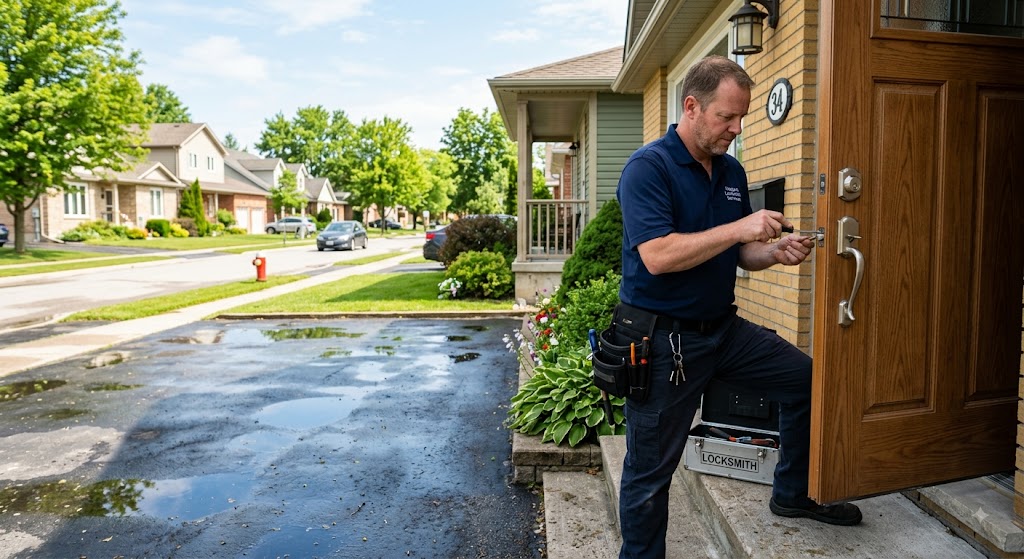
Don’t let seasonal humidity or sub-zero winter weather compromise your property’s safety. Patrick’s Locksmith Service brings fully equipped mobile units directly to your driveway anywhere in St. Catharines, Niagara Falls, Welland, and across the entire region. Whether you need precision door re-alignment, high-security cylinder upgrades, or emergency lock repairs, trust our local expertise.
Call Patrick’s Locksmith Service today at 905-685-4514 or submit an online inquiry to secure your Niagara property with weather-tested door hardware solutions!